Why Talc Is Essential for Modern Industries
Talc is a soft, platy magnesium silicate used as a functional filler in plastics, paints, rubber, ceramics and paper. This article explains why manufacturers use it, where it is used, what regulation buyers should know, and how SKZ prepares it.
Introduction
Talc is a versatile mineral used across many industries, from plastics and paints to cosmetics and ceramics. It is a hydrated magnesium silicate and the softest mineral on the Mohs hardness scale. SKZ Mining Company supplies talc lumps and mesh powder processed at its meshing plants in Peshawar.
Why manufacturers use talc
Talc's thin, plate-like particles and chemical inertness make it useful as a functional filler — a mineral that does a job in a formulation rather than simply adding bulk.
- Plastics and polymers: adds stiffness and heat resistance, and helps parts hold their shape.
- Paints and coatings: acts as an extender that improves spreading and gives a smooth, even finish.
- Rubber: helps compounds flow during processing and reduces stickiness.
- Ceramics: supports workability and behaviour during firing.
- Cosmetics and personal care: valued for softness and absorbency in powders — a closely regulated use (see below).
- Pharmaceuticals: used as an excipient, for example as a lubricant in tablet manufacture — only in grades that meet the relevant pharmaceutical requirements.
Where talc is used, in numbers
The US Geological Survey reports that talc produced and sold in the United States in 2025 was used as follows. These are US market figures, not SKZ sales, but they show where talc's properties matter most.
| End use | Share |
|---|---|
| Plastics | 36% |
| Paint | 19% |
| Ceramics (including automotive catalytic converters) | 17% |
| Paper | 12% |
| Roofing | 8% |
| Rubber | 2% |
| Agriculture, cosmetics, export, insecticides and other | 6% |
Pakistan is a major talc supplier: according to the same report, it accounted for 52% of US talc imports in 2021–24, and large quantities of crude talc mined in Afghanistan were milled in and exported from Pakistan.
Regulation: what buyers should know
Talc for cosmetics and other consumer products is under close regulatory review. In December 2024 the US Food and Drug Administration proposed stricter testing to detect asbestos in talc-containing cosmetics, and in July 2025 the European Chemicals Agency's Committee for Risk Assessment recommended classifying talc as a Category 1B carcinogen and as causing lung damage through prolonged or repeated inhalation. If your product is regulated, specify the tests and documents your market requires before ordering.
How SKZ prepares talc
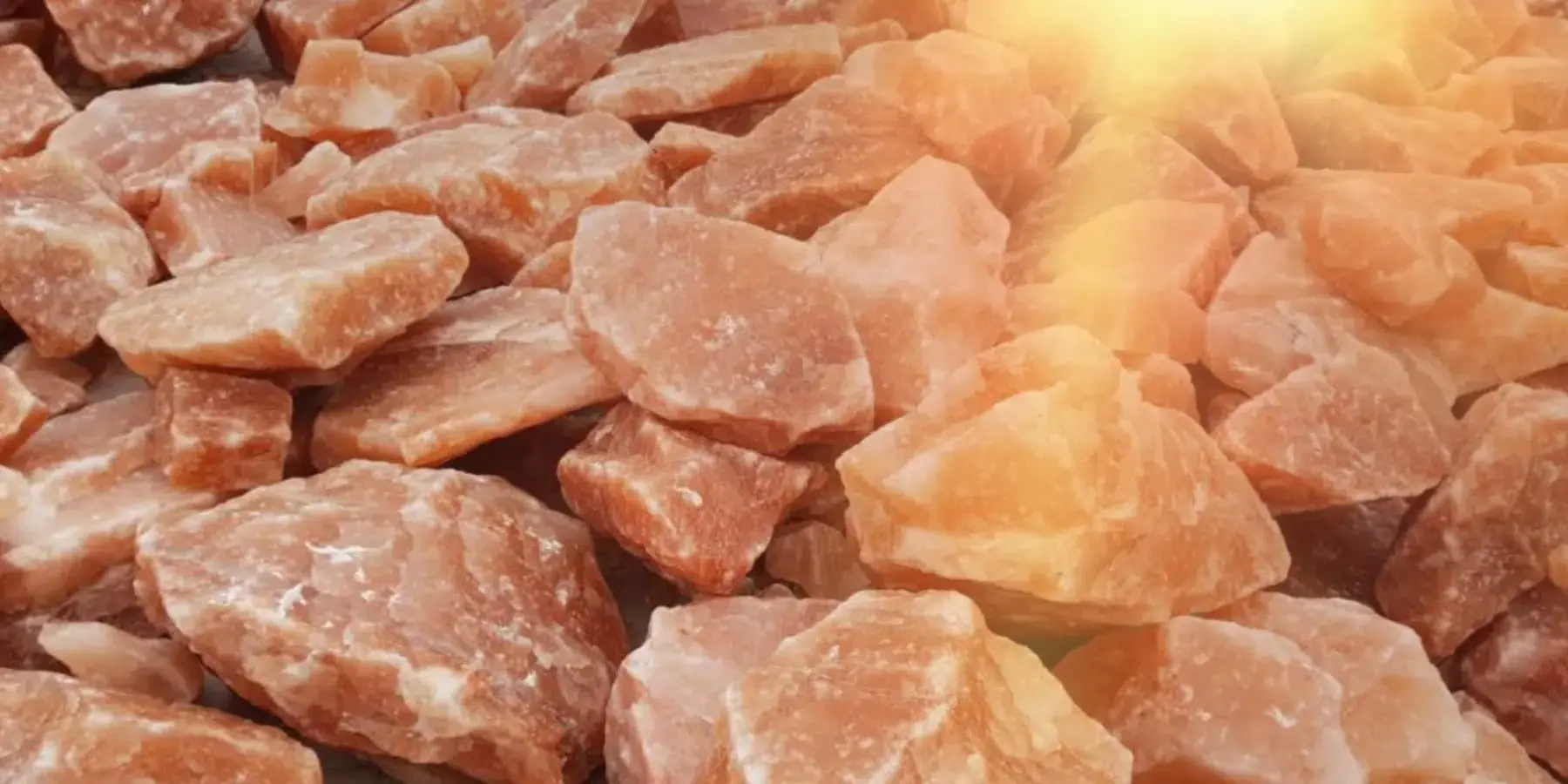
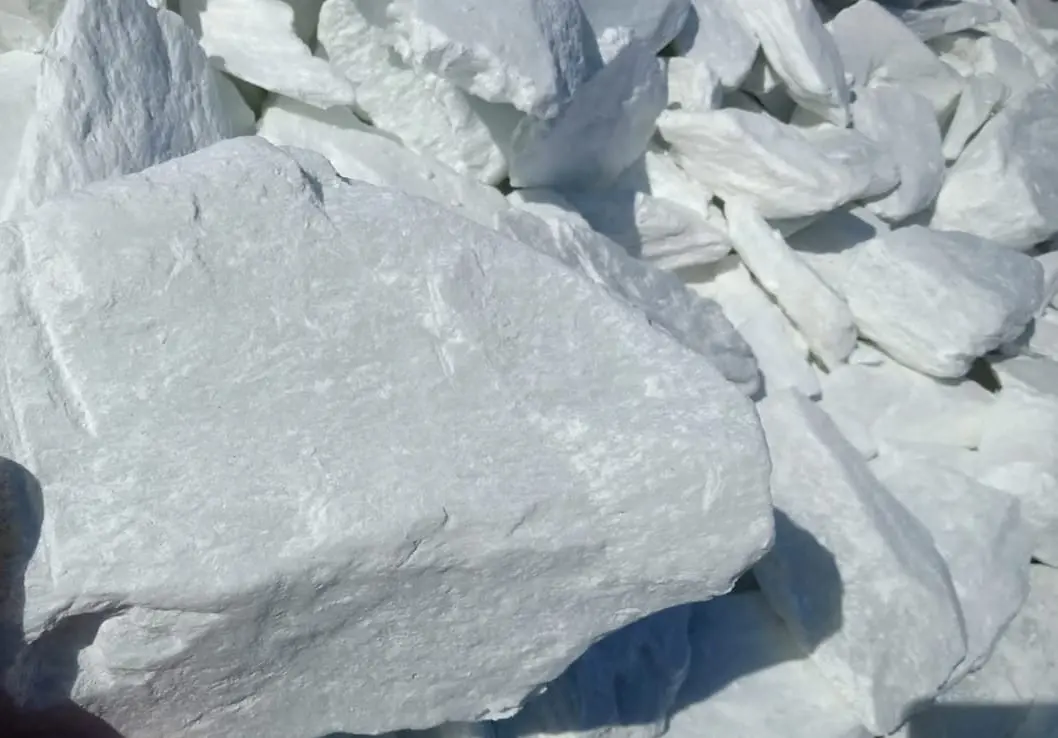
- Careful sourcing and sorting: raw talc is sorted by colour and quality before processing. Our documentation lists coffee, white, grey and green colour grades.
- Milling to the required fineness: our two meshing plants in the Hayatabad Industrial Zone, Peshawar, grind talc from 250 to 2500 mesh.
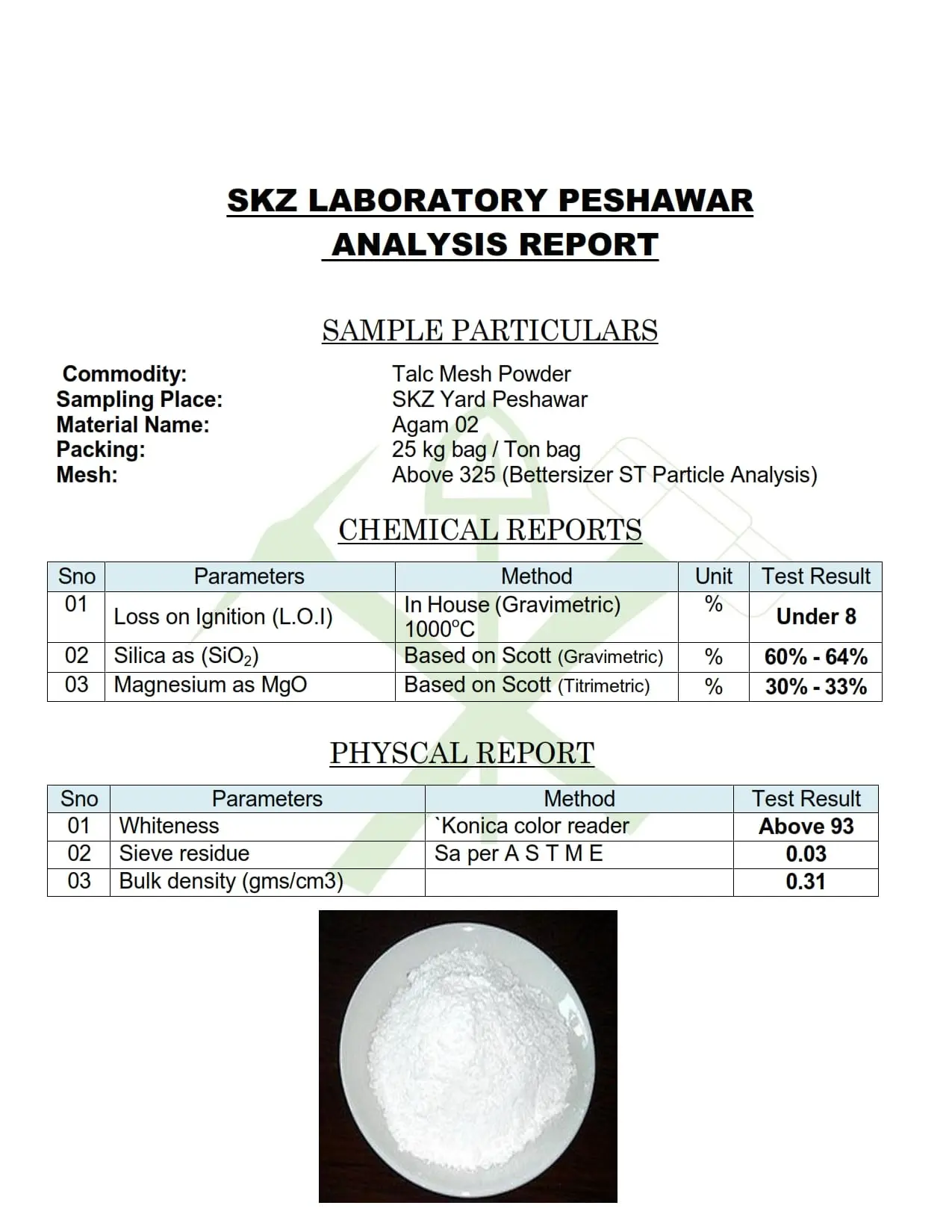
- Laboratory checks: the SKZ laboratory in Peshawar tests parameters such as whiteness, loss on ignition, silica and magnesium oxide content, sieve residue, bulk density and particle size.
- Packing for shipment: powder is packed in 25 kg bags or ton bags.
Conclusion
Choosing the right talc means matching the grade to the job: particle size, whiteness and chemistry all matter. For help writing a specification, see how to specify talc mesh size and particle size, or compare talc and calcium carbonate as fillers. If you are specifying talc for a new or existing product, share your target values and application with us and we will suggest a suitable grade.
Sources
- U.S. Geological Survey, Mineral Commodity Summaries 2026: Talc and Pyrophyllite — end uses, import sources and regulatory developments.
- SKZ Mining Company: plants, milling range, colour grades, laboratory parameters and packing (company information and SKZ Laboratory reports).
Editor's note: this article was first published on 20 March 2025. It was edited on 21 September 2026 for clarity, accuracy and sourcing.