Talc vs Calcium Carbonate: Which Mineral Filler Fits Your Application?
Talc and calcium carbonate are both white mineral fillers, but they behave differently. This comparison covers chemistry, hardness, particle shape, typical uses and what to ask a supplier.
Short answer
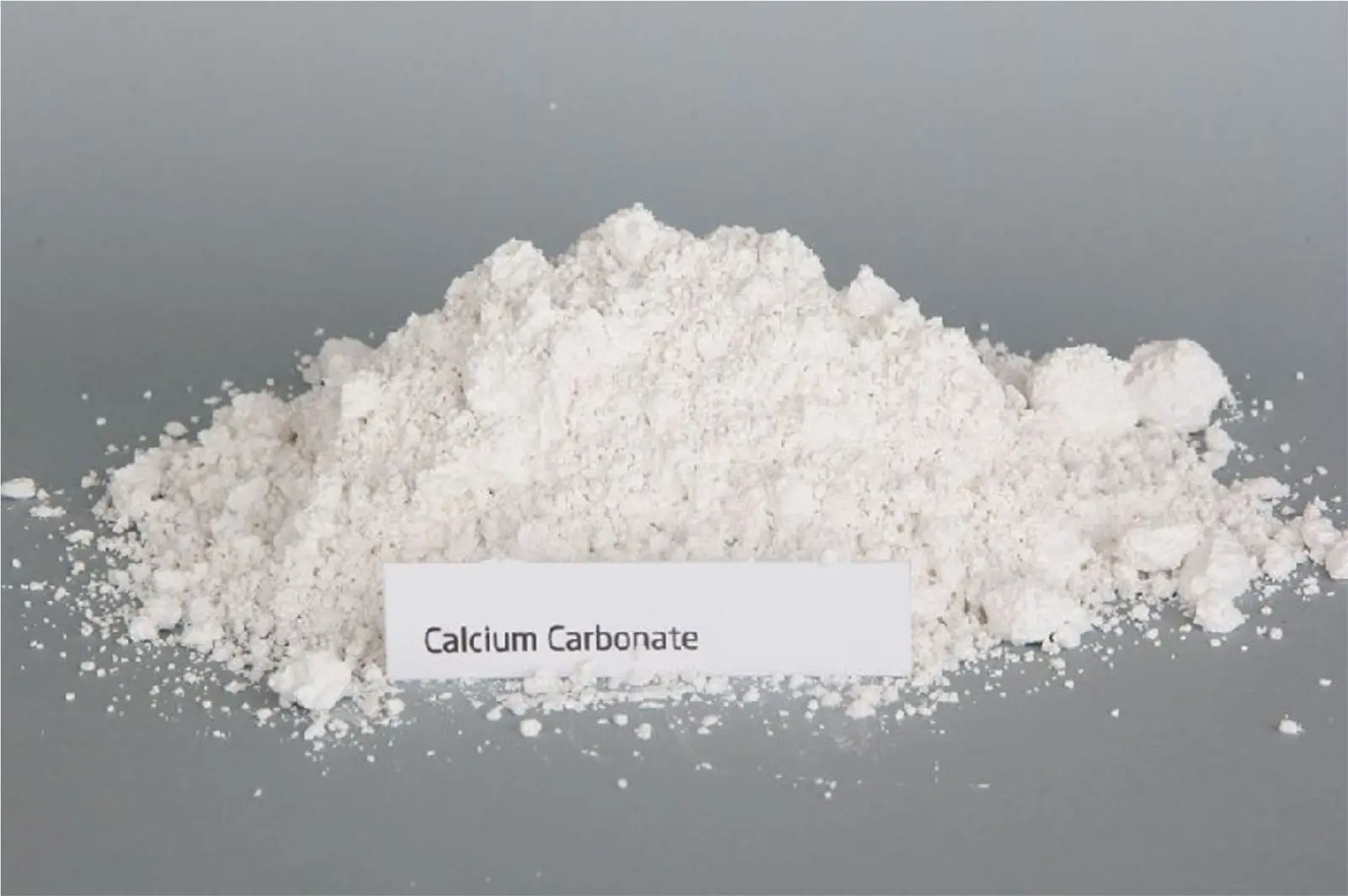
Talc is a very soft, platy magnesium silicate that is often chosen when a formulation needs stiffness, heat resistance or a barrier effect. Calcium carbonate is a harder, more granular calcium mineral that is often chosen for bulk, whiteness and cost control. Many plastics, paints and papers use one, the other, or both.
Side-by-side comparison
| Property | Talc | Calcium carbonate |
|---|---|---|
| Chemistry | Hydrated magnesium silicate, Mg₃Si₄O₁₀(OH)₂ | Calcium carbonate, CaCO₃ (the mineral calcite) |
| Mohs hardness | 1 — the softest mineral on the scale | 3 (calcite) |
| Particle shape | Thin plates (lamellar) | Blocky or granular |
| Behaviour with water | Hydrophobic (water-repellent) | Hydrophilic unless surface-treated (coated grades are common) |
| Behaviour with acids | Chemically inert | Reacts with acids, releasing carbon dioxide |
| Typical roles | Stiffness, heat resistance, barrier, slip | Bulk, whiteness, opacity, cost control |
Why particle shape matters
Talc's flat plates align during processing. In a polymer they act like reinforcing platelets, which is why talc is used to stiffen moulded plastic parts such as polypropylene components. In coatings, overlapping plates can slow the passage of moisture. Calcium carbonate particles are more compact, so they add volume and whiteness without the same reinforcing effect.
Where each mineral is used
The US Geological Survey reports that talc produced and sold in the United States in 2025 went mainly into plastics (36%), paint (19%), ceramics including automotive catalytic converters (17%), paper (12%), roofing (8%) and rubber (2%). These figures describe the US market, not SKZ's sales, but they show where talc's properties are valued.
Calcium carbonate is used across plastics, rubber, paint, paper and construction materials, and as an agricultural liming material. The USGS lists calcium carbonate and kaolin as substitutes for talc in paper — one of the applications where the two minerals compete directly.
Paint: a case where formulation matters
Talc is hydrophobic. The USGS notes that as the paint industry shifted from oil-based to water-based products to reduce volatile emissions, talc became less well suited to some paint uses. Talc remains in use in coatings, but the right filler depends on the binder system and the properties you need.
Questions to ask before choosing
- What must the filler do: add stiffness, add bulk, improve whiteness, or reduce cost?
- Will the material meet acids or acidic environments, where calcium carbonate can react?
- What particle size and top cut does your process tolerate?
- Is the end use regulated (food contact, cosmetics, pharmaceuticals)? If so, which tests and documents are required?
Specifying either mineral from SKZ
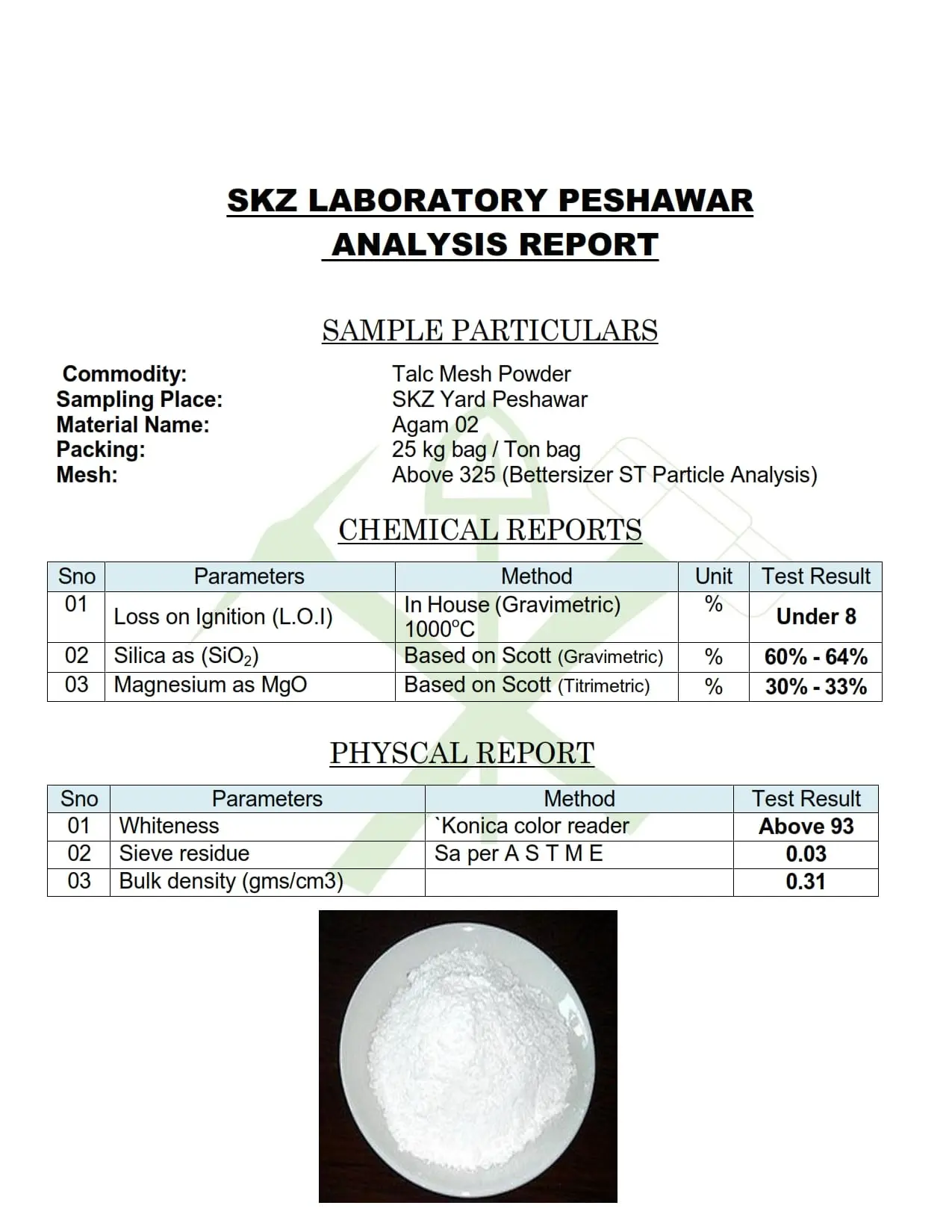
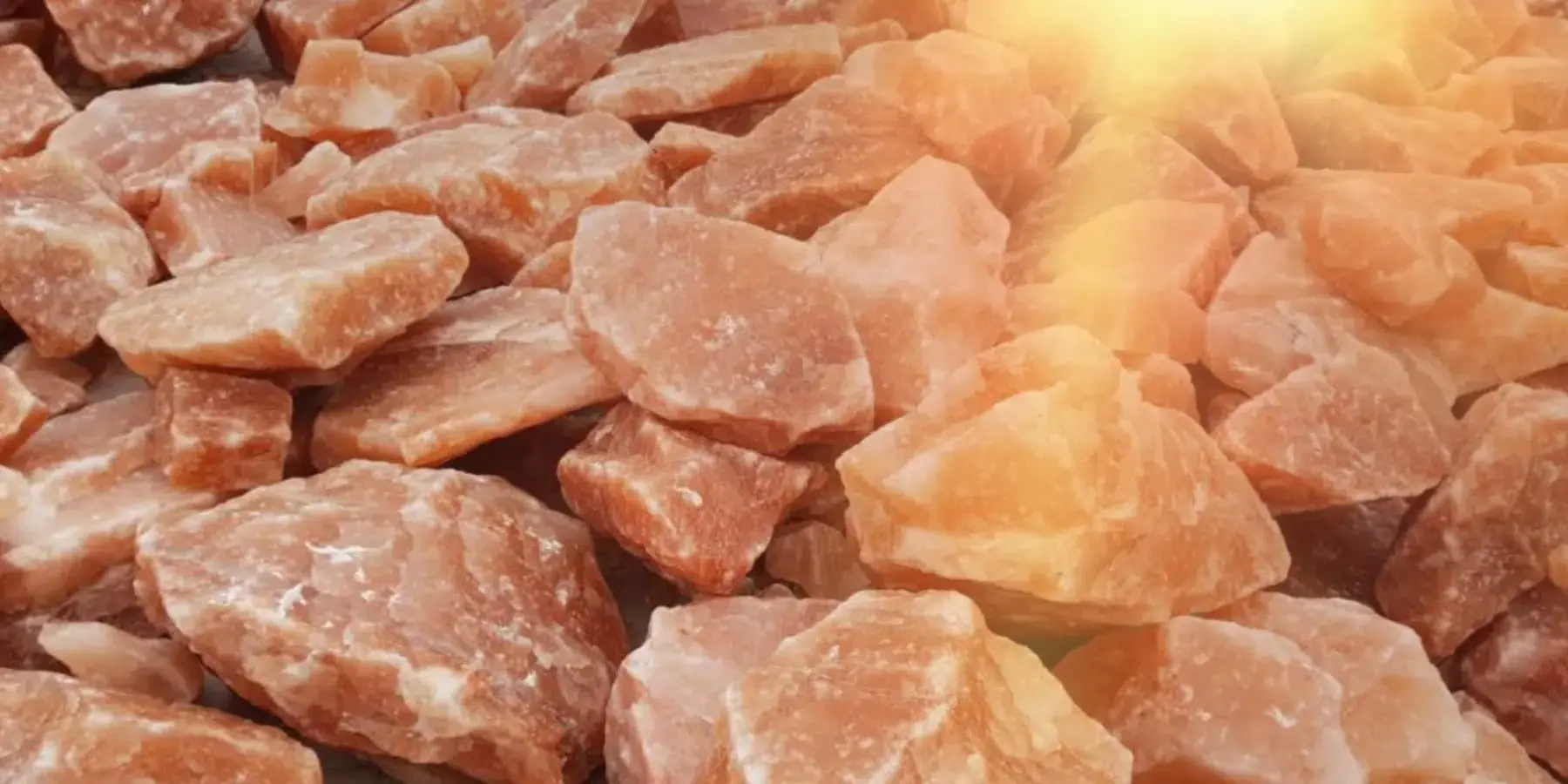
SKZ supplies talc as lumps and mesh powder milled in Peshawar, with published representative values and laboratory reports, and calcium carbonate quoted against your specification. For guidance on particle size, see how to specify talc mesh size and particle size. When you request a quote, describe the application and target values and we will say which material and grade we can offer.
Sources
- U.S. Geological Survey, Mineral Commodity Summaries 2026: Talc and Pyrophyllite — end uses, water-based paint note and substitutes.
- U.S. Geological Survey, Mohs Hardness Scale — talc 1, calcite 3.
- SKZ Mining Company: product forms, milling and laboratory information.