Himalayan Pink Salt vs Rock Salt: What Is the Difference?
Himalayan pink salt is a type of rock salt. This guide explains how rock salt differs from sea, solar and vacuum-pan salt, what gives pink salt its colour, and what buyers should specify.
Short answer
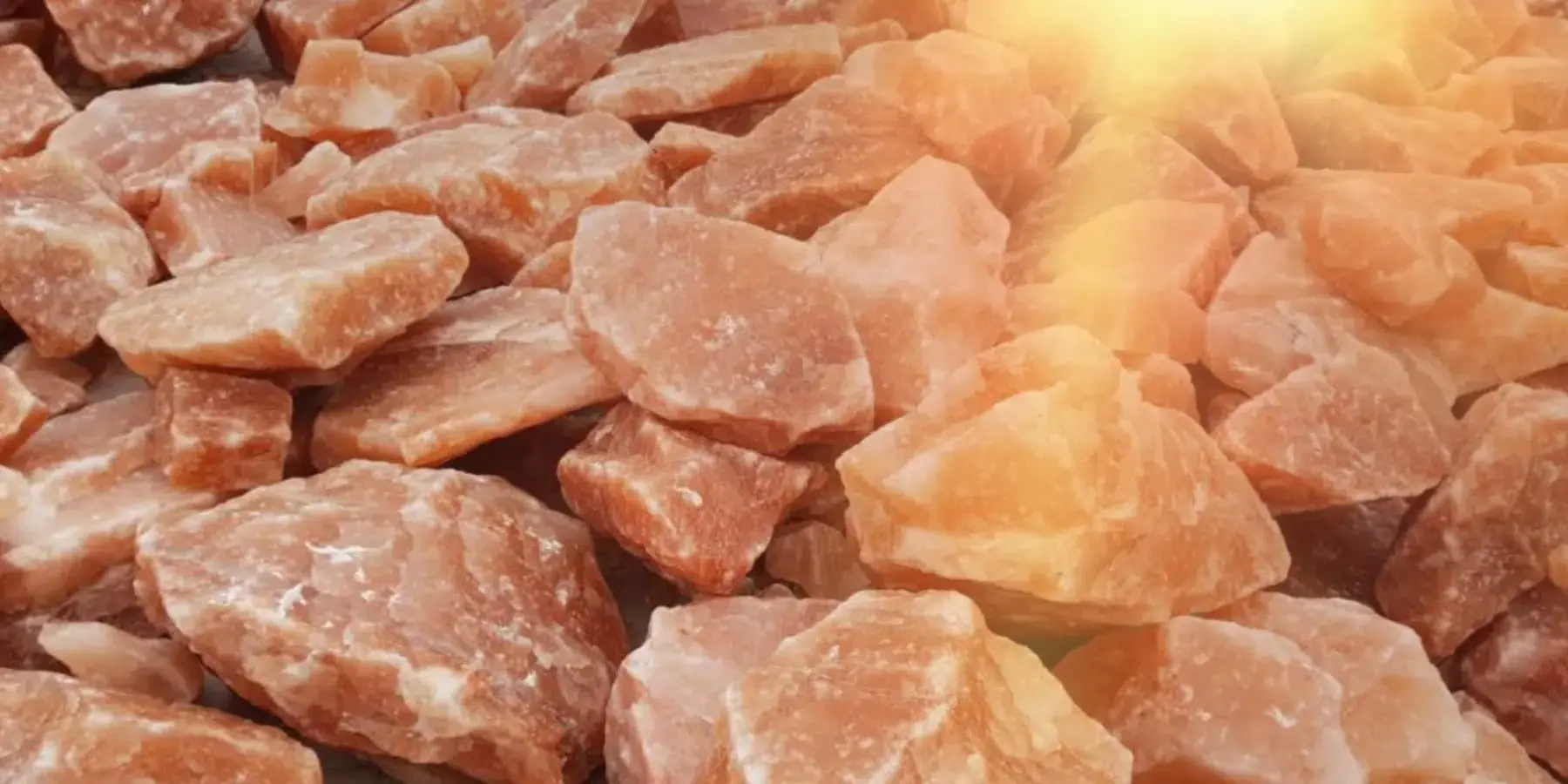
Himalayan pink salt is rock salt. "Rock salt" means salt (the mineral halite, sodium chloride) that is mined from underground deposits rather than made by evaporating sea water or brine. Himalayan pink salt is rock salt from the Salt Range in Punjab, Pakistan, whose natural pink to orange colour comes from small amounts of other minerals such as iron compounds.
How salt is produced: four main types
The US Geological Survey groups salt by how it is produced:
| Type | How it is made | Examples of use |
|---|---|---|
| Rock salt | Mined from underground halite deposits | De-icing, industry, and — after selection and processing — food and décor |
| Solar salt | Sea water or saline-lake brine evaporated by sun and wind | Food and industrial uses |
| Vacuum-pan salt | Brine evaporated in closed vessels, giving fine, uniform crystals | Table salt, food processing |
| Salt in brine | Salt dissolved underground and pumped out as brine | Chemical feedstock (chlorine and caustic soda) |
In the United States in 2025, salt in brine made up about 44% of salt sold or used, rock salt 38%, and solar and vacuum-pan salt about 9% each. Pakistan's salt production was estimated at 3.1 million tonnes in 2025.
Himalayan pink salt compared with other rock salt
- Colour: much rock salt is white, grey or brownish. Himalayan pink salt ranges from pale pink to deep orange, and some pieces are almost white.
- Composition: like other salt, it is mostly sodium chloride. The minerals that colour it are present in small amounts.
- Uses: ordinary rock salt is widely used for road de-icing and industry. Himalayan pink salt is mostly sold for food, bath and spa products, lamps and décor, and cooking slabs, where its appearance matters.
Is pink salt healthier than ordinary salt?
We do not make health claims for pink salt. It is mostly sodium chloride, and the colouring minerals are present only in small amounts. Buyers choose it for its appearance, texture, crystal size and origin.
What buyers should specify
- Format: fine or coarse granules, chunks, slabs or blocks.
- Colour range: light pink, dark pink, or mixed.
- Grain size: for granules, the size range in millimetres.
- Intended use: food, bath/spa, décor or cooking slabs — this determines the processing and documents needed.
- Documents: for food use, the analysis certificate and any other documents your importer needs.
- Packing and quantity: bag or carton size, labelling, and order volume.
Buying pink salt from SKZ
SKZ Mining Company supplies Himalayan pink salt and salt slabs for cooking and serving. For uses and formats, see Himalayan pink salt: uses and formats. Tell us the format, colour, grain size and destination when you request a quote, and we will confirm what can be supplied and which documents are available.
Sources
- U.S. Geological Survey, Mineral Commodity Summaries 2026: Salt — salt types, US shares by type and world production including Pakistan.